
 Português
 English
 Español
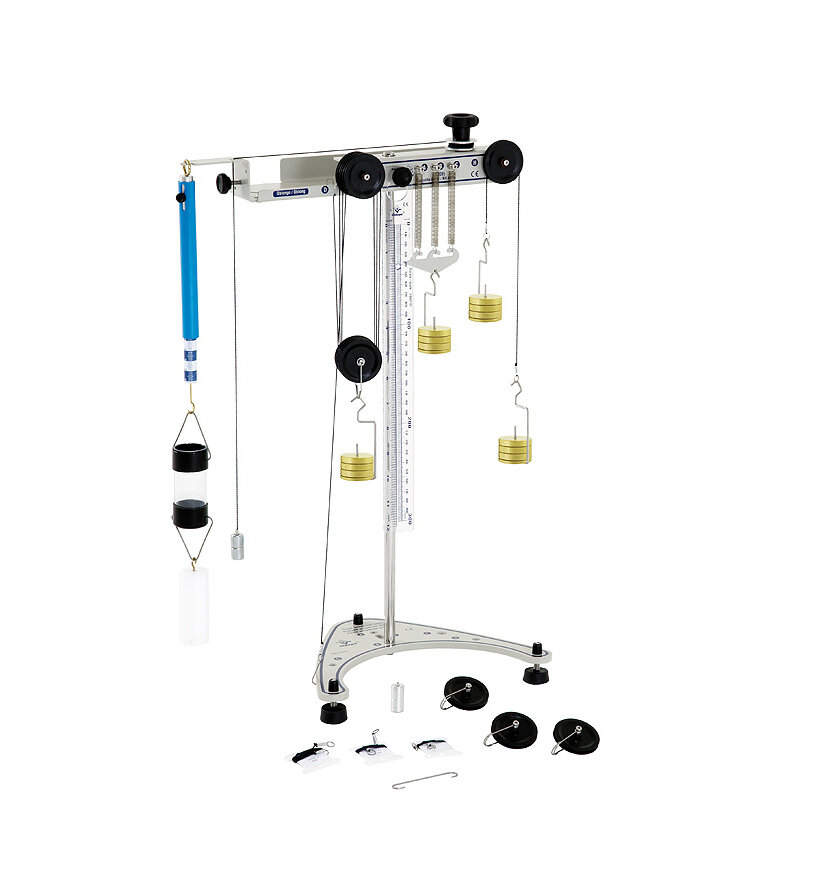
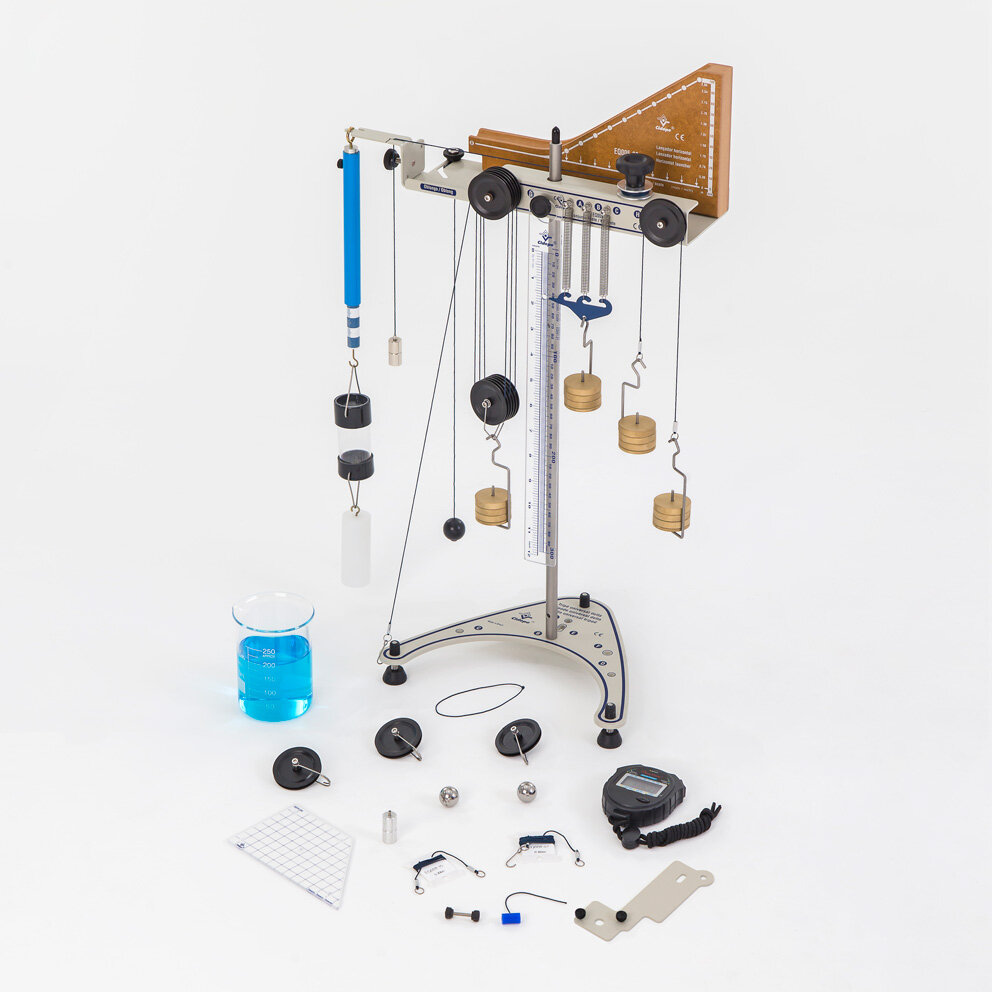
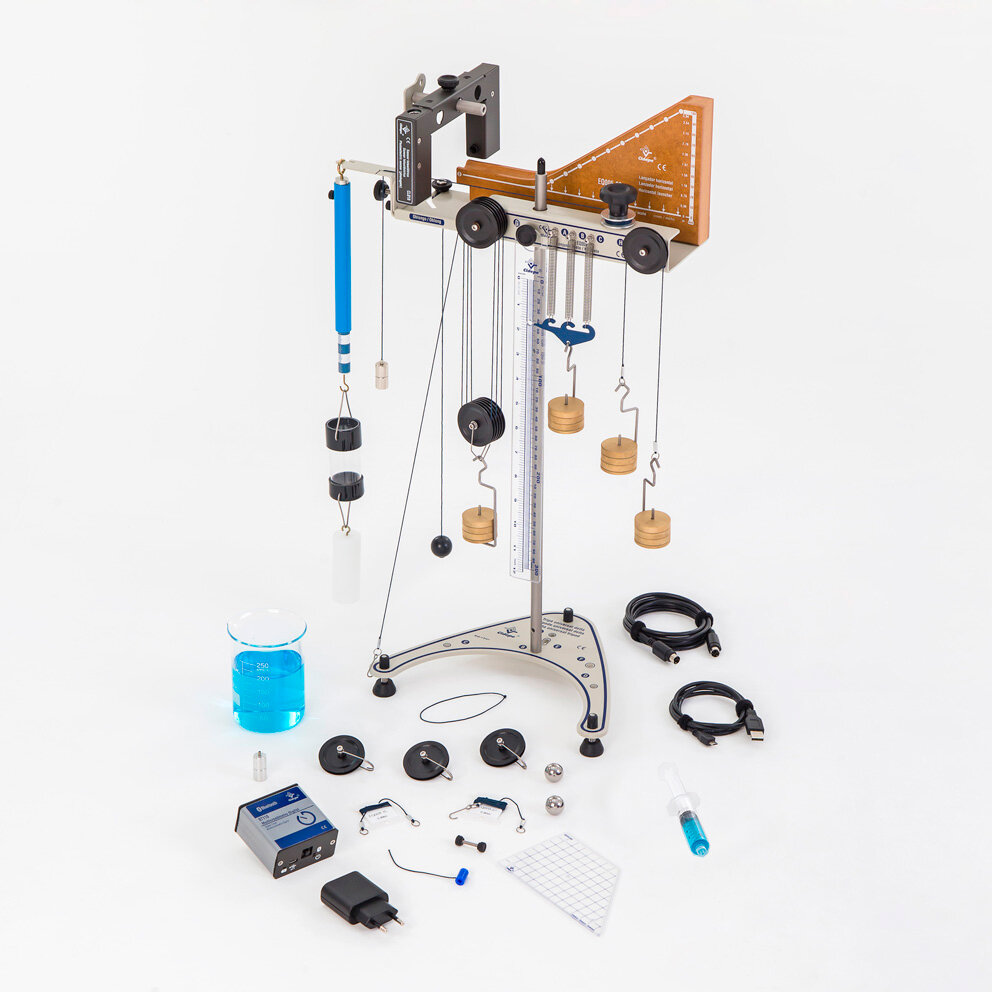
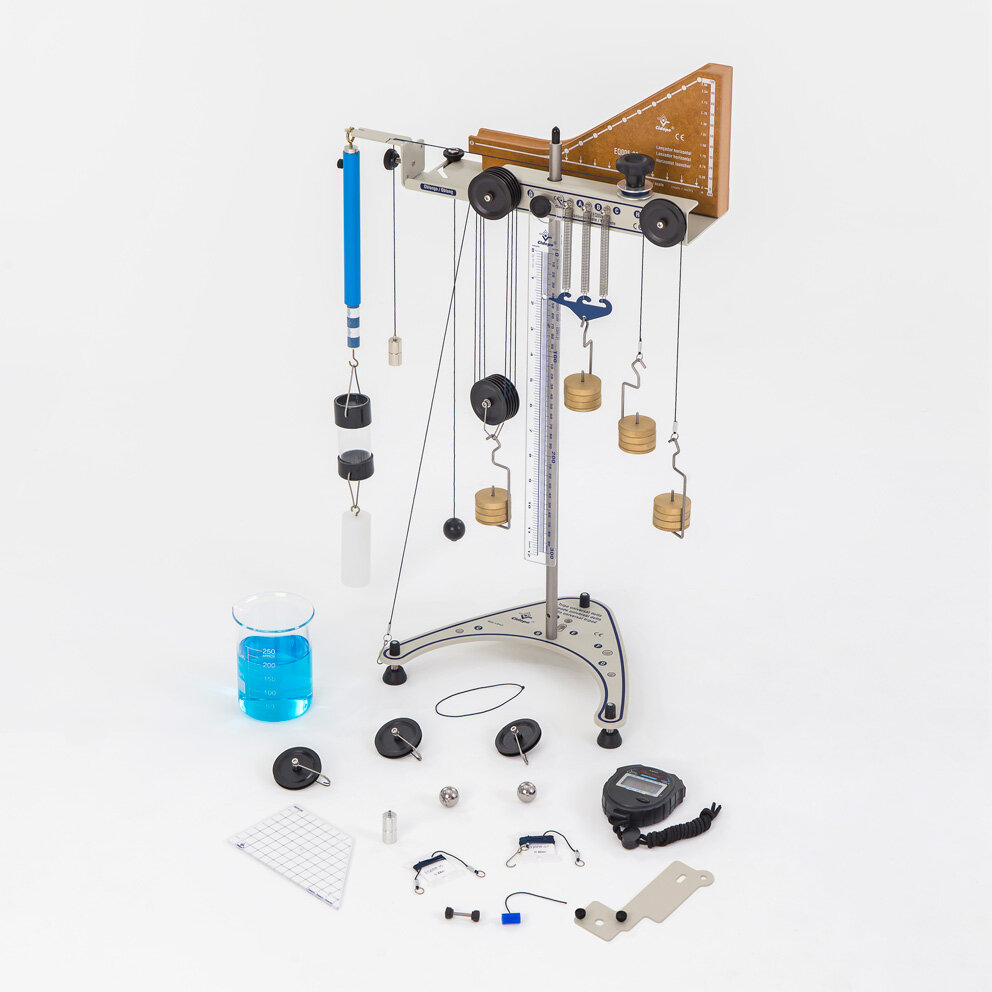
Fluid mechanics set
Code: EQ033D




Function
Intended for experimental study, physics laboratory work, and conducting physics experiments on: Physics. Fluid mechanics. Atmospheric pressure. The Magdeburg hemispheres experiment and atmospheric pressure. What is meant by Magdeburg hemispheres. Reducing the internal pressure of the discs. Balancing the internal pressure of the discs with atmospheric pressure. Hydrostatics. Pascal's principle, the hydraulic lift. What is meant by fluid. The proportion that relates the acting forces to the cross-sectional areas of the cylinders. The free surfaces of a liquid within open, non-capillary communicating vessels. What are communicating vessels? Capillarity. Leveling points on a vertical barrier. The pressure at a point in a liquid in equilibrium, Stevin's principle. How to read the depth of the submerged point. Measuring the pressure at different depths of a liquid at rest. Stevin's principle, the fundamental principle of hydrostatics. The density of a liquid as a function of the known density of another liquid, immiscible liquids. Measuring the height of an oil column by difference. Measuring the height of a water column by difference in the branch that balances the oil column. What is meant by an isobaric surface. The hydrostatic force buoyancy, a quantity with direction, sense, and magnitude (value). Scalar and vector quantities. The mass of a body does not change; it is a scalar quantity and one of the general properties of matter. The weight of a body can change; it depends on where the body is located. The relationship between the "apparent decrease in the weight of a body immersed in a liquid" and buoyancy. Determining the value, direction, and sense of the hydrostatic force buoyancy. Archimedes' principle, buoyancy, and its relationship to the volume and density of the displaced liquid. The principle of the impenetrability of matter. Calculating and determining the characteristics of the hydrostatic force buoyancy. The relationship of buoyancy to the weight of the volume of displaced liquid. The relationship of buoyancy to the volume, density of the displaced liquid, and the acceleration due to gravity. The relationship between buoyancy and the volume and specific weight of the displaced liquid. Determining the density of a steel solid through buoyancy. Determining the density of a brass solid through buoyancy. Determining the density of an aluminum solid through buoyancy. Determining the density of an irregular solid through buoyancy. Absolute density (specific mass) and relative density, etc.
Quote product

Main experiments
- 1032.093
- 1042.026C
- The free surfaces of a liquid within open, non-capillary communicating vessels. 1042.004D
- 1042.008C
- 1042.020C
- The hydrostatic force, buoyancy, is a quantity with direction, sense, and magnitude. 1042.028D
- Archimedes' principle, buoyancy, and its relationship to the volume and density of the displaced liquid. 1042.032D
- 1042.032D1
- 1042.032D2
- 1042.032D3
- Determining the density of an irregular solid through buoyancy. 1042.032D5